Whistleblower or leaker? Under EU law, the route decides #
In late September, OpenAI parted ways with three AI safety researchers. As reported by the Wall Street Journal and Common Dreams , the company said the three had shared “confidential company information” with a third-party AI safety organisation, and that its investigation found they “mishandled sensitive information outside established company procedures.” The company did not name the organisation or describe the information. Rep. Greg Casar, chair of the Congressional Progressive Caucus, responded: “Looks like they’re firing whistleblowers.”
Both descriptions can be sincere. One side sees a breach of confidentiality, the other sees protected disclosure. Which one it is depends on facts that have not been published, and nothing here is a judgment on this case. The researchers’ location, what they shared and the governing law are all unknown.
What the case does show is a question every AI company will face. When an insider is worried about what the company is building, where are they supposed to take that concern? For AI providers and deployers in the EU, that question now has a statutory answer.
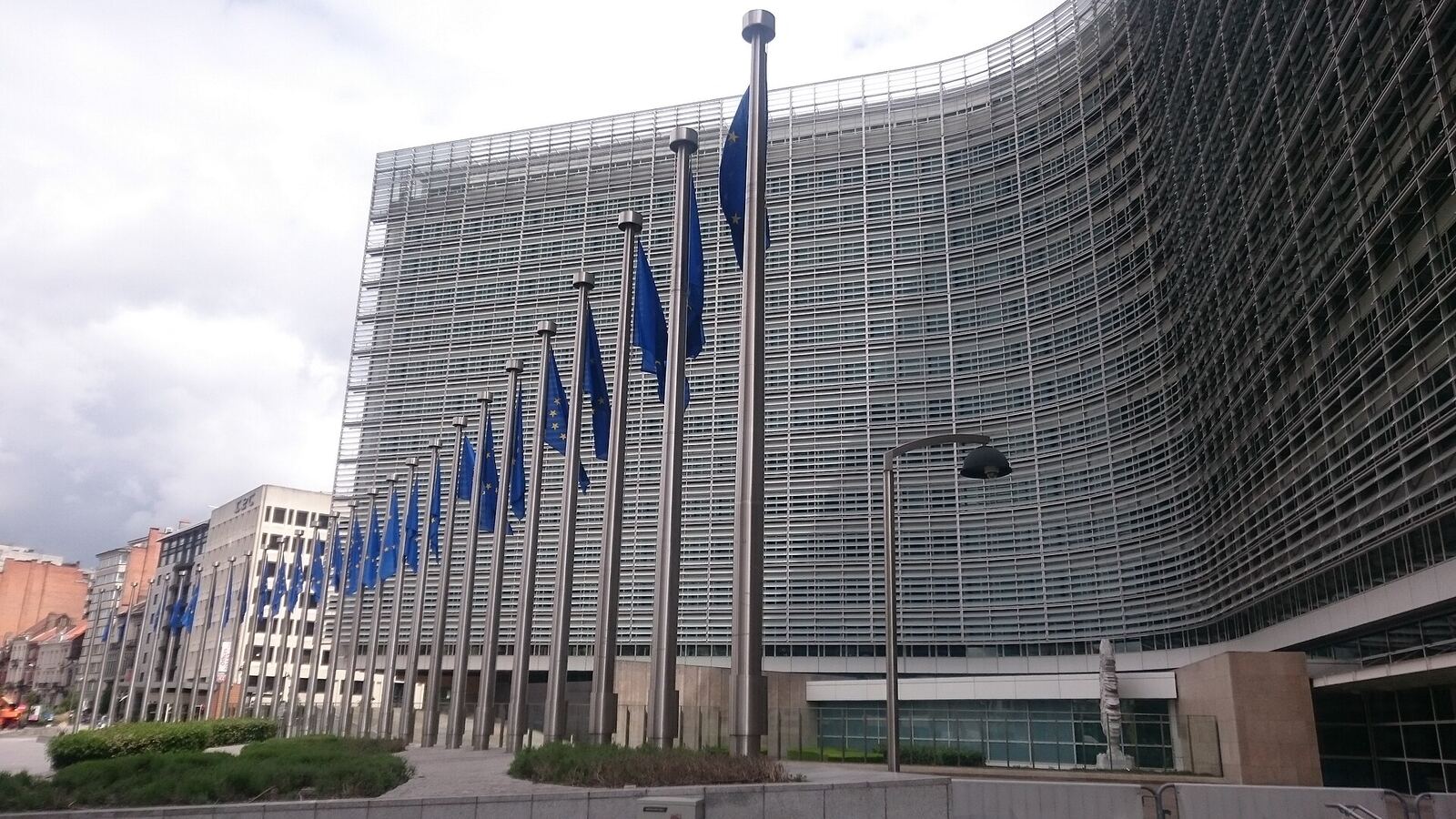
The Berlaymont, Brussels. The Commission’s AI Office, which supervises general-purpose AI models, runs its own whistleblower tool for AI Act reports. Photo: KenSwe72, CC BY 4.0 , via Wikimedia Commons . Resized and cropped.

Article 87: the AI Act plugs into the Whistleblower Directive #
Article 87 of the AI Act (Regulation 2024/1689) is a single sentence:
“Directive (EU) 2019/1937 shall apply to the reporting of infringements of this Regulation and the protection of persons reporting such infringements.”
It has applied since 2 August 2026. From that date, reporting an AI Act infringement is a protected disclosure under the EU Whistleblower Directive, with everything that comes with it: the ban on retaliation (Art. 19), immunity from liability for the disclosure itself (Art. 21(2) and 21(7)), and a reversed burden of proof once a reporter shows they reported and then suffered a detriment (Art. 21(5)).
The Commission had prepared for this. In November 2025 the AI Office launched a whistleblower tool for people professionally connected to providers of general-purpose AI models: employees, contractors, shareholders and board members. It accepts confidential or anonymous reports in any official EU language and offers a secure inbox for follow-up. At launch the AI Office said that until 2 August 2026 confidentiality was the main safeguard. That interim period is over.
The Directive protects routes, not intentions #
The Directive does not protect anyone who discloses something for a good reason. Under Article 6, a reporter qualifies for protection if they had reasonable grounds to believe the information was true and within scope, and they reported through one of three routes:
- Internally, through the organisation’s own whistleblowing channel (an “internal reporting channel” under Art. 7–9).
- Externally, to a competent authority (Art. 10–14). For AI Act infringements, that means the national market surveillance authority or, for general-purpose AI models, the AI Office.
- By public disclosure, under the conditions in Art. 15: either after an internal or external report produced no appropriate action in time, or where there is imminent danger to the public interest, a risk of retaliation, or little prospect that an external report would be dealt with.
A private research organisation, a think tank or an advocacy group is not on that list. At the Directive’s minimum standard, sharing information with one of them is not a protected route. Member States may offer more (Art. 25), but a reporter cannot count on it.
This is the uncomfortable part of the “whistleblower or leaker” debate. The same information, with the same motive, can lead to two different legal outcomes depending only on where it was sent.
The route that exists determines the route that gets used #
The Directive is not neutral about which route comes first. Article 7(2) asks Member States to encourage internal reporting where the breach can be addressed effectively internally and the reporter considers there is no risk of retaliation. That is a condition, not a preference. If the people with the concern don’t trust the internal channel, the Directive itself expects them to go elsewhere.
That puts much of the outcome back on the employer. A safety researcher who believes something is wrong will take the concern somewhere. If the company offers a channel they trust, with confidentiality, a deadline for a response and a record that cannot be quietly closed, the concern goes there and the company gets to deal with it first. If the company offers nothing credible, the concern goes to an authority, the press or a third party. Whether that last step is protected or not, the company has already lost the chance to act on it.
An AI company does not need to win the “whistleblower or leaker” argument after the fact. It needs to make the protected internal route the obvious one before the fact.
What changes for AI providers and deployers in the EU #
Any legal entity with 50 or more workers already had to run a whistleblowing channel under Article 8. Article 87 doesn’t create a new channel. It widens what the existing one has to accept. In practice:
- Update the scope of your whistleblowing policy. Policies list the areas of Union law they cover. If yours predates August 2026, it probably doesn’t mention the AI Act. Add it, together with the external routes: your national market surveillance authority and, if you provide general-purpose AI models, the AI Office’s tool.
- Check your confidentiality agreements. Article 24 provides that the Directive’s rights “cannot be waived or limited by any agreement, policy, form or condition of employment.” A confidentiality clause can protect trade secrets. It cannot prevent someone from making a protected report.
- Make the channel credible to technical staff. Researchers and engineers will judge a channel by its design: whether it can be used anonymously, whether it is separate from the company’s own systems, and whether it requires a login that ties the report to an employee account. A channel that only legal knows about doesn’t meet the Directive’s expectation that it be effective. See If employees have to ask where the whistleblowing channel is, you don’t have one .
- Keep the clocks. Acknowledge receipt within 7 days and give feedback within 3 months (Art. 9(1)(b) and (f)). A report about an AI system is subject to the same deadlines as a report about procurement fraud.
- Document the handling. If a dismissal is ever challenged, the reversed burden of proof means the employer must show the decision had nothing to do with the report. That is far easier with a complete, timestamped case record than with an email thread.
The question to ask before the next case #
When a dispute like this one becomes public, it is usually too late to decide what kind of disclosure it was. The facts are contested, the motives are disputed and the people involved have already been let go.
The useful question for an AI company comes earlier: if one of our researchers were worried tomorrow, would they report to us first? If the honest answer is no, the problem is not their judgment. The company has no whistleblowing channel they trust.
EthicsPortal is EU whistleblower compliance infrastructure: anonymous intake from any browser, two-way communication without revealing identity, and tracking of the Article 9 deadlines on every case. Set up your whistleblowing channel .
Last updated: